
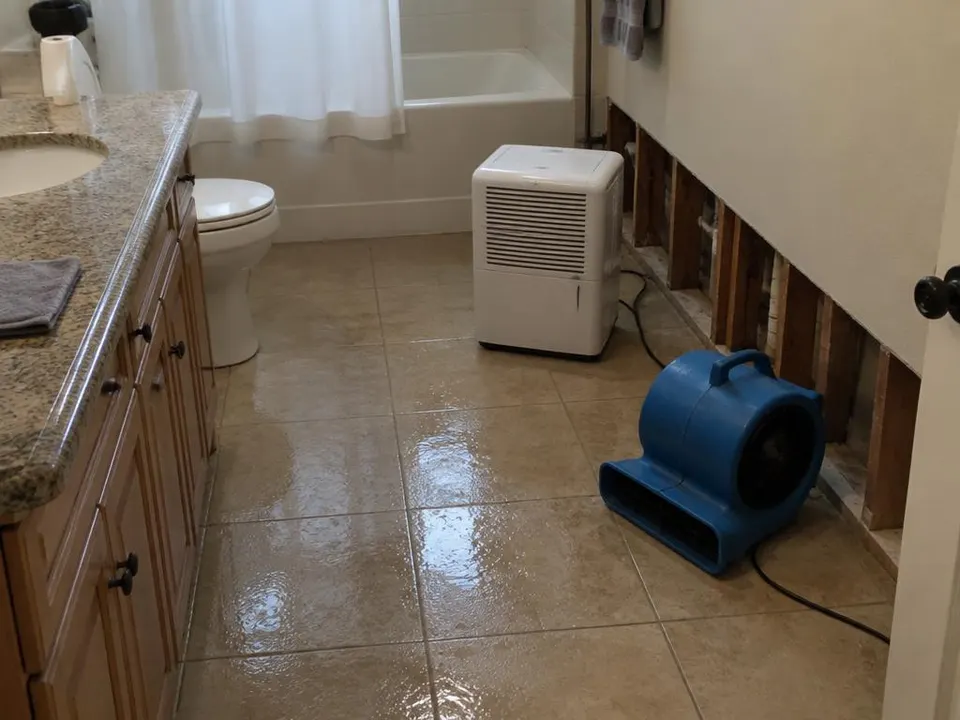
A bathroom overflow could involve different contents and different routes through a building. No one can classify it safely from the room name alone.
What should the assessor establish about the source?
Ask which fixture or line discharged, what was in the water and whether the event was a one-time overflow or a continuing fault. HomeAdvisor describes gray-water examples involving detergents or a toilet with certain contents; that list cannot classify a specific Fullerton loss. A professional should make and explain the assessment.
What lies beyond the first visible patch?
Request a scope that distinguishes the floor surface, any adjoining wall materials and materials under the floor that actually need evaluation. Ask which observations justify removal, drying or reconstruction. The floor guide covers the separate question of material condition after visible water is removed.
Stay away from the affected area, do not touch electrical switches, outlets or appliances near water, and call a professional. If anyone is in danger, leave the area and call 911.
Should an insurance claim be assumed?
No. A bathroom location alone establishes neither the timing of the event nor policy coverage. Tell the insurer what is known, ask which documents it needs and review the contract’s water exclusions. The policy-question guide is not a coverage opinion.
Calls go to voicemail, not a live provider. Messages are recorded and transcribed after the greeting. You can email us instead.
Free for homeowners. We may be paid for qualifying referral calls.
Sources
- HomeAdvisor, How Much Does Water Damage Restoration Cost? (accessed October 11, 2026).
- U.S. EPA, Flood Cleanup to Protect Indoor Air and Your Health (accessed October 11, 2026).
- California Department of Insurance, Residential Insurance Guide (accessed October 11, 2026).
- California Contractors State License Board, Check a License (accessed October 11, 2026).